ON BRANDS & ADVERTISING
Bite-size: AI made the look of craft cheap, so a finished ad can no longer prove that anyone worked on it. Brands are now publishing the proof: making-of films, named artists, head counts of model makers. The science behind the move is the labor illusion, which shows that people value work more when they can watch it happen. Saying the work happened does much less. And once people suspect the proof can be staged, every making-of gets checked, whether or not anything was faked.
Full-size:
Prada’s holiday film comes with a second film. In it, veteran animator John Pomeroy talks about learning his craft with pencil and paper. Oura’s ring campaign has a making-of too, for a one-tenth-scale city that took 35 model makers three weeks to build in Prague. Apple Music released a film documenting how it played notes through a bath of oil to create its new identity. Coinbase’s low-poly Oscars spot got a D&AD Behind the Work video on how the game world was recreated almost entirely in camera.
The making-of has become part of the campaign.
In The AI Discount, I argued that people read a visibly expensive ad as a sign the brand believes in its product, and that an AI image takes that sign away. These brands are spending on craft again, but the spending is hard to see in the finished ad. AI can now fake the handmade look cheaply, so the look alone proves very little. Brands are putting the proof into the story of how the ad was made. Most viewers will only hear that story secondhand, which is why it has to hold up.
The wait people chose
Ryan Buell and Michael Norton named the labor illusion in 2011, and I touched on it in Sweat Signals. They simulated a flight-search site and gave people identical results in different ways. Some got them instantly. Others waited while the screen showed the sites being searched and the fares being compiled.
When people compared two sites directly, 62% chose the one that made them wait 30 seconds and showed its work over the instant one. At 60 seconds, 63% still chose it. When the wait came with only a progress bar, those numbers fell to 42% and 23%.
The mechanism is a social one. Seeing the work made the site seem to try harder; that effort triggered reciprocity, and reciprocity raised perceived value. People felt the company had done something for them. Buell and Norton also named the risk of automation: when a service hides the work, it can undersell what it delivers.
Advertising now has a version of that risk. Production has always happened out of sight, but a finished ad used to imply a crew, a shoot, and a budget. (Even CGI implied an artist at the controls.) Generative AI is the first tool people suspect of doing the work on its own. In a study of news headlines, Altay and Gilardi found that people assume anything labeled AI-generated was fully automated. Patil and Rice’s eight studies put a cost on it for brands: AI disclosures made ads seem less effortful, products seem lower quality, and engagement fell.
Showing beats saying
The most useful part of the paper is the third experiment. Before a 30-second wait, one group saw a message saying the site was preparing to search 100 sites, along with the list. On a 7-point scale, perceived value was 3.82 with a progress bar, 4.49 with the message and 5.13 when people watched the work happen. With no wait at all, the message made no significant difference.
That is the gap between a “no AI” claim and a making-of. Oura could have stopped at saying it skipped AI. It also filmed people building a working city, and Buell and Norton’s numbers suggest that second move does more. A claim is still advertising, and people discount advertising. A snow lynx drawn one frame at a time is harder to wave away.
The closest AI test comes from Carney, Riveros and Tully in the Journal of Consumer Research. They analyzed TikTok engagement around its AI disclosure rule and ran preregistered experiments. Posts with an AI label got about 7% to 8% fewer likes than the same creator’s other posts with the same number of views. The drop came from perceived effort: people felt less connected to a creator who seemed to try less, and content quality wasn’t the cause. When the label named a more effortful tool, Photoshop’s AI filters, the drop disappeared. When the creator explained that AI had only added falling snow, it didn’t.
Where it breaks
Effort can’t rescue a bad ad. In Buell and Norton’s final experiment, visible effort helped when the result was good and hurt when it was bad. Showing the work and then delivering a poor outcome produced the worst ratings in the study. A making-of for a forgettable ad documents the waste.
Faked effort is a bad bet. Buell and Norton separated real transparency from manufactured effort and flagged the second as an ethical problem. They also warned that suspicion of manipulation can erode the effect. That is persuasion knowledge again, and a staged making-of would hand people the cue.
A craft story can make AI work look worse. Patil and Rice found the AI disclosure penalty grew when an ad signaled that people made the product, as with handmade goods, and shrank when it stressed automated production. If AI generated the ad, a handmade story points at the gap.
Suspicion outruns the facts. About a week after Prada’s film, Dior released Christian Dior’s Night in Color with a making-of, and Jonathan Anderson told WWD the film was all hand-drawn. Within days, viewers were freeze-framing a hand that seemed to have six fingers and calling it AI. Director Sylvain Chomet later told Variety that a team of artists drew the film over seven months and that software filled in some of the frames between their drawings. By then, the debate was the story. A public debate works like an unofficial label. In Carney, Riveros and Tully’s experiments, the label changed engagement and the amount of AI actually used did not, so a brand can pay the penalty whether or not it used AI. Once people know a making-of can be staged, they have reason to check every one.
The evidence has a gap. Buell and Norton studied wait screens, and I couldn’t find a test of whether a making-of film shrinks the AI discount. The closest evidence points that way, but a brand should run its own test.
What to do with this
Show the work on screen. A “no AI” line is the weakest version. Sketches and rejected versions give people something to see. Prada built the sketches into its campaign images, so the proof travels with the ad.
Use numbers and names. Specifics are harder to fake and easier to repeat. Oura gave the press 35 model makers and three weeks, and those details ran through the coverage.
Scale it to the budget. In Buell and Norton’s fourth experiment, making the work visible raised perceived value overall, and the amount of work had no significant main effect. A small brand can show the illustrator’s sketchbook and name the photographer.
Keep the story honest about AI. If AI generated the work, skip the craft story. If people made the work and AI helped, say exactly which parts each did. An Adweek columnist argued that Dior would have avoided most of the controversy by saying early that artists drew the key frames and software filled the gaps.
Make the proof checkable. Plan it with the ad and build as much as you can into the ad itself, since most people will never watch a making-of. For the rest, name the makers and publish their drawings, so the press and commenters have something to verify.
Test it. Show one group the ad and another the ad plus the making-of, then ask, “Who do you think made this?” You’ll learn whether the proof changes the answer, and whether that changes how people rate the brand.
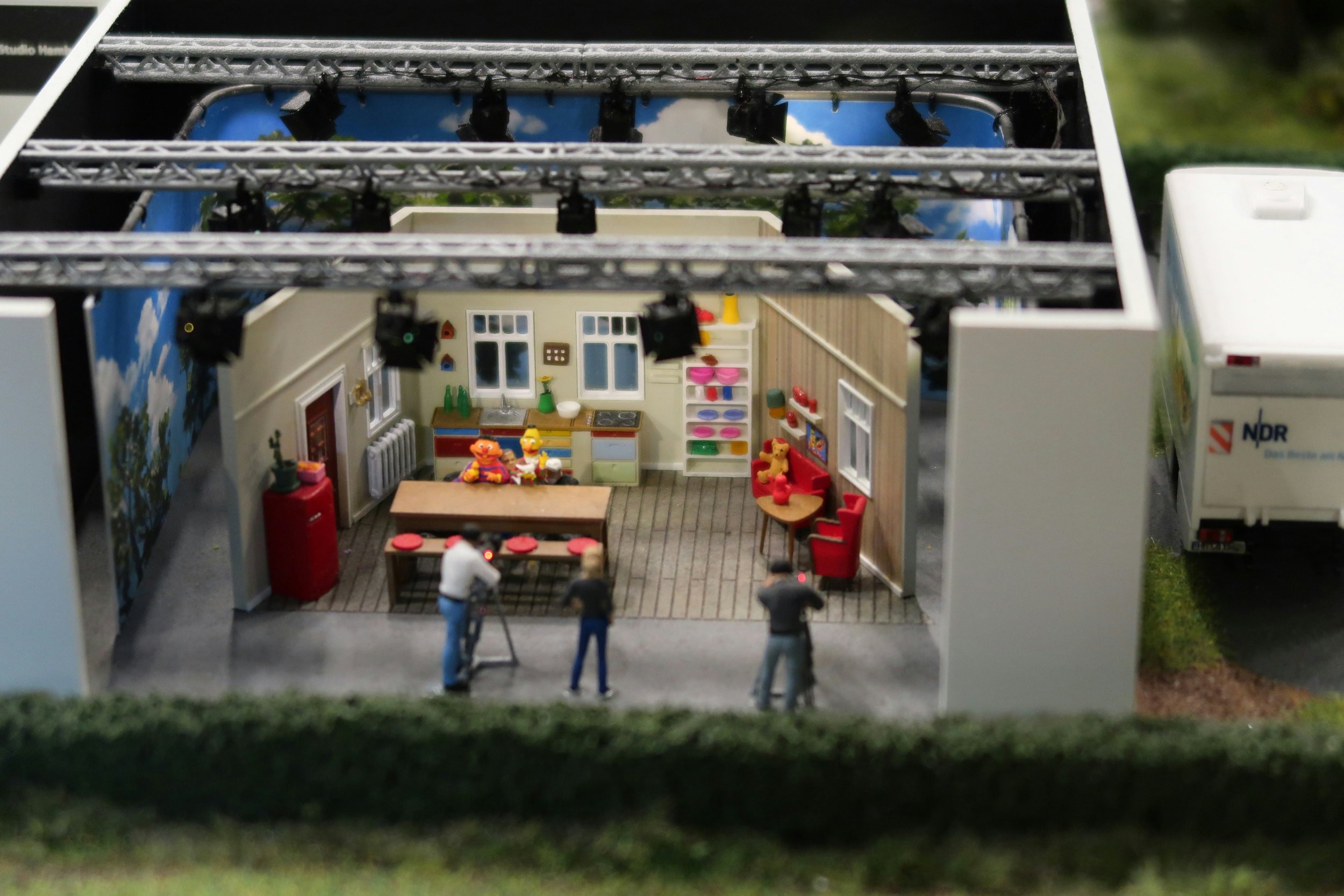
A miniature set with the crew in frame, where more brands now want theirs. Photo: Aurora Song / Unsplash
Sources
Research
Altay, S., & Gilardi, F. (2024). People are skeptical of headlines labeled as AI-generated, even if true or human-made, because they assume full AI automation. PNAS Nexus, 3(10), pgae403.
Buell, R. W., & Norton, M. I. (2011). The labor illusion: How operational transparency increases perceived value. Management Science, 57(9), 1564–1579.
Carney, S., Riveros, I., & Tully, S. M. (2026). Made with AI: Consumer engagement with social media containing AI disclosures. Journal of Consumer Research.
Patil, R. K., & Rice, D. H. (2026). Is that your best effort? How AI-use disclosure in digital advertising affects perceived effort and engagement. Journal of Business Research, 215, 116354.
Campaigns and context
Dear Brand, all I want for Christmas is no AI, Famous Campaigns
Prada trades pixels for pencils this holiday season, Marketing-Interactive
Prada backs human craft with a hand-drawn holiday film, DesignRush
As AI slop floods feeds, luxury brands are going all in on handmade ads, Fast Company
Oura lets its fingers do the living in handmade miniature city, The Drum
Dior taps Sylvain Chomet for 2026 holiday campaign, WWD via Yahoo
Dior’s holiday ad triggers new AI debate, Fast Company
Sylvain Chomet fires back at AI accusations over Dior film, Variety
The AI-or-not debate is advertising’s most pointless argument, Adweek